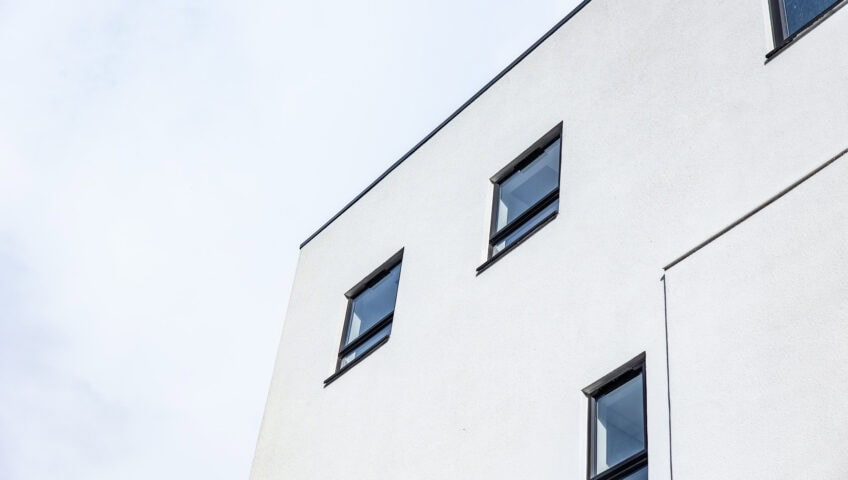
As autumn temperatures fall and heating systems are switched back on across the UK, attention naturally turns to keeping our homes warm and managing rising energy costs. While many homeowners focus on boilers, thermostats and heating controls, one of the most effective ways to improve a property's energy efficiency is to reduce heat loss with external wall insulation.
For properties with poorly insulated walls, a significant amount of heat can escape through the building fabric. External Wall Insulation (EWI) provides an effective solution, helping to improve thermal performance, increase indoor comfort and transform the appearance of a property at the same time.
At SAS Render Systems, we supply high-performance external wall insulation and render systems designed to deliver long-term protection, improved energy efficiency and reliable thermal performance for both new-build and refurbishment projects.
How Much Heat Is Escaping Through Your Walls?
According to the Energy Saving Trust, around a third of the heat lost from an uninsulated home can escape through its walls. For homeowners, this means that even when the heating is running, valuable warmth may be continually lost to the outside environment. This is particularly relevant to older properties constructed with solid brick or stone walls, as well as cavity-wall properties where insulation is absent, insufficient or unsuitable.
Improving wall insulation can help to:
- Reduce heat loss through external walls.
- Maintain more consistent indoor temperatures.
- Reduce the demand placed on heating systems.
- Improve thermal comfort throughout the property.
- Lower heating costs, depending on the property and heating arrangements.
- Improve the external appearance of tired or weathered façades.
Rather than simply generating more heat, improving insulation helps a building retain the warmth it already produces.
What Is External Wall Insulation?
External Wall Insulation, also known as an External Insulation and Finish System (EIFS), involves installing a layer of thermal insulation to the outside of a building, followed by a reinforced basecoat and a protective decorative render finish. By positioning the insulation externally, the system helps reduce heat transfer through the walls while limiting thermal bridging at structural junctions.
Unlike internal insulation, EWI generally allows improvements to be made without reducing usable floor space or requiring extensive internal redecoration. It can also be particularly beneficial when combined with an existing façade refurbishment, allowing thermal improvements and aesthetic upgrades to be completed as part of the same project.
Choosing the Right External Wall Insulation System
Not all buildings have the same requirements, and selecting the correct insulation material is an important part of achieving long-term performance. At SAS Render Systems (SAS Europe), our ProRend EIFS offers solutions incorporating both expanded polystyrene (EPS) and mineral wool insulation.
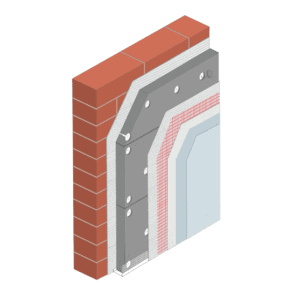
EPS External Wall Insulation
Expanded polystyrene is a popular choice for external wall insulation projects due to its thermal performance, relatively low weight and cost-effectiveness. EPS systems can provide a practical solution for suitable masonry properties, helping achieve improved U-values without unnecessarily complex construction methods.
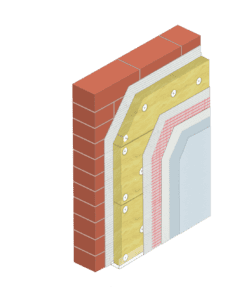
Mineral Wool External Wall Insulation
Mineral wool offers excellent thermal insulation alongside additional benefits, including non-combustibility of the insulation material, vapour permeability and acoustic performance. It can be particularly suitable where fire performance, moisture management or the existing wall construction influences the insulation specification. The most appropriate solution will depend on the building's construction, exposure, fire requirements and target thermal performance.
Independently Certified Performance and Long-Term Protection
When investing in external wall insulation, choosing a system with proven performance and long-term durability is just as important as improving thermal efficiency. The SAS ProRend EIFS EWI System combines high-performance insulation, a reinforced basecoat and a durable decorative finish, providing a complete solution for both new-build and refurbishment projects.
BBA Certification – Up to 30 Years' Durability
ProRend EIFS benefits from independent assessment by the British Board of Agrément (BBA), with an assessed service life of up to 30 years, subject to the relevant certificate conditions, correct installation and maintenance. This provides reassurance to homeowners, architects and contractors that the system has been independently assessed for long-term performance.
10-Year System Warranty
For additional peace of mind, SAS offers a 10-year system warranty on qualifying ProRend EIFS installations, providing confidence in a complete system supplied and supported by SAS Render Systems (SAS Europe).
Independently Classified Fire Performance
The ProRend EPS EIFS system achieves a B-s1,d0 reaction-to-fire classification in accordance with BS EN 13501-1, for the relevant tested system configuration. This indicates a limited contribution to fire, very limited smoke production and no flaming droplets during the classification test.
Mineral wool EIFS options are also available for projects requiring A1 non-combustible insulation, subject to the fire performance requirements of the complete wall system.
Understanding U-Values: Why Insulation Thickness Matters
A U-value measures the rate at which heat passes through a building element. The lower the U-value, the better its thermal performance.
For many existing properties undergoing thermal refurbishment, a wall U-value of approximately 0.30 W/m²K is a common regulatory benchmark, although the applicable requirement depends on the project and building regulations.
New-build projects typically require improved levels of thermal performance as part of the overall building energy assessment. The insulation thickness needed to achieve a particular U-value depends on the existing wall construction and the thermal conductivity of the chosen insulation.
At SAS, our technical team can assist with U-value calculations and suitable system specifications, helping designers and contractors establish an appropriate insulation thickness before work begins.
More Than Just Insulation: A Fresh And Durable Look for Your Property
One of the biggest advantages of EWI is that improving thermal performance does not have to come at the expense of appearance. With the correct render system, an ageing brickwork, blockwork or previously rendered façade can be transformed into a clean, contemporary finish.
Our ProRend systems can be completed with a selection of decorative finishes, including ProRend Colourtex silicone render, providing a durable, water-repellent and attractive external surface. With a wide selection of colours available, homeowners and designers can achieve anything from a traditional neutral finish to a modern architectural appearance.
The result is a thermally efficient building with an upgraded exterior, finished in ProRend Colourtex silicone render for excellent water repellency and weather resistance, helping protect external walls against the demanding British climate.
Is Autumn a Good Time to Install External Wall Insulation?
With heating costs becoming a more immediate consideration, autumn is often when homeowners start thinking seriously about insulation improvements. However, external wall insulation and render installation must always be planned around suitable weather conditions. Low temperatures, rainfall, high humidity and insufficient curing conditions can affect the application of cementitious basecoats and decorative finishes. For this reason, installation should follow the relevant product guidance, with appropriate protection and sufficient curing time allowed.
Although the colder months may not always provide ideal installation conditions, autumn and winter are excellent times to plan an EWI project, allowing specifications, quotations and installation arrangements to be prepared ahead of more favourable weather.
 Why Choose SAS Render Systems (SAS Europe)?
 Why Choose SAS Render Systems (SAS Europe)?
Based in Exeter, SAS Europe supplies external wall insulation, render and façade systems to projects across Devon, Cornwall, Somerset and the wider UK. Our technical team works closely with architects, contractors, developers and homeowners, providing guidance from the initial specification through to installation.
Our support includes:
- External wall insulation system specifications.
- U-value calculations and insulation thickness recommendations.
- Technical advice on existing substrates and building construction.
- Render finish and colour selection.
- Installation guidance and project support.
- Access to experienced applicators and contractors.
Whether you're upgrading a single property or specifying insulation for a larger development, choosing a suitable system and installation approach is essential to achieving reliable long-term performance.
Planning to Improve Your Property's Thermal Performance?
As the heating comes back on this autumn, it may be worth considering whether your external walls are doing enough to keep the warmth inside. External Wall Insulation can provide a long-term improvement to a building's energy efficiency while giving its exterior a completely new lease of life.
With up to 30 years' BBA-assessed durability, a 10-year system warranty and independently classified fire performance, ProRend EIFS offers a comprehensive solution for improving the thermal performance and protection of external walls.
Thinking about an EWI project?
Contact the technical team at SAS Europe to discuss your property, insulation requirements or upcoming project.
Visit sas-europe.com to explore our external wall insulation and render systems.