 Cold temperatures, damp conditions and unpredictable weather can all affect external rendering. Here's how to avoid common problems and achieve reliable results during the winter months.
As temperatures drop across the UK, external rendering becomes increasingly challenging. Shorter daylight hours, higher humidity, overnight frost and prolonged damp conditions can all influence how render products behave during application and curing. For professional rendering contractors, understanding these risks is essential to achieving a durable, high-quality finish. At SAS Render Systems, we regularly provide technical guidance on render application, substrate preparation and suitable weather conditions. While winter rendering is possible, successful installation requires careful planning, appropriate protection and strict adherence to product application requirements.
Can You Render in Winter in the UK?
Yes, external rendering can take place during winter, provided the environmental conditions remain within the manufacturer's specified limits. However, winter rendering presents additional risks that are less common during warmer months. Most conventional cementitious and ready-mixed render products require temperatures of at least 5°C during application and the initial curing period, although exact requirements vary between products. Importantly, this applies not only to the surrounding air but also to the substrate and the render itself. A wall that has been exposed to overnight frost may remain significantly colder than the daytime air temperature. For this reason, contractors should never rely solely on the weather forecast when deciding whether conditions are suitable for rendering.
1. Understand Minimum Application Temperatures
Temperature is one of the most important factors affecting render application. When temperatures fall, cement hydration slows, while the drying and film formation of polymer-based finishes can also be affected. This can result in extended curing times, reduced early strength development and an increased risk of defects. Before starting work, contractors should check:
- The current ambient air temperature.
- The temperature of the substrate.
- Forecast temperatures during the initial curing period.
- The possibility of overnight frost.
- The manufacturer's minimum application and curing temperatures.

SAS Technical Tip: A forecast daytime temperature of 7 degrees Celsius does not necessarily mean conditions are suitable if temperatures are expected to fall below the product's permitted limit overnight.

2. Protect Fresh Render from Frost
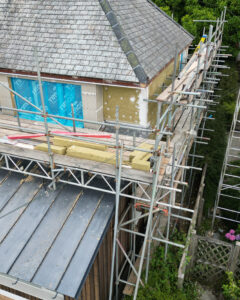
Freshly applied cementitious render is particularly vulnerable to freezing before it has developed sufficient strength. If water within the material freezes during early curing, the expansion can disrupt the developing cementitious structure. Potential consequences include reduced strength, surface damage and loss of adhesion. Contractors should avoid applying render to frozen substrates or where frost is likely to affect the material before it has cured sufficiently. Protective sheeting, appropriately designed scaffold enclosures and controlled environmental conditions may help, provided they maintain suitable temperatures and ventilation. Simply covering the scaffold with sheeting does not guarantee adequate frost protection.
3. Allow for Extended Curing and Drying Times
One of the most common mistakes during winter rendering is assuming that products will cure or dry at the same rate as they do during warmer weather. Low temperatures and high humidity can significantly extend drying times. This is particularly important when applying multi-layer render systems. For example, when using a cementitious basecoat followed by a primer and decorative finish, the basecoat must be sufficiently cured and dry before subsequent products are applied. Applying the next layer prematurely can increase the risk of trapped moisture, discolouration and adhesion problems. Contractors should assess actual site conditions rather than relying solely on standard drying times quoted for more favourable temperatures.
4. Avoid Rendering onto Saturated or Frozen Substrates
Substrate condition is just as important as the weather. During winter, masonry can retain moisture for extended periods, particularly following prolonged rainfall. Applying render to saturated, frozen or otherwise unsuitable substrates can compromise adhesion and performance. Before rendering, check that the substrate is:
- Structurally sound and suitably prepared.
- Free from frost and ice.
- Free from standing water and excessive moisture.
- Suitable for the specified render system.
- Within the manufacturer's permitted temperature range.
Different backgrounds absorb moisture at different rates, so substrate assessment should always form part of the application process.
5. Understand the Risks of Blistering and Debonding
Blistering and debonding can have several causes, including substrate contamination, inadequate preparation, trapped moisture, application technique and unsuitable environmental conditions. Cold, damp weather can increase the risk of certain problems by slowing curing and drying. However, it is important not to assume that winter conditions are responsible for every render defect. When investigating a failure, contractors should consider the complete application process, including substrate condition, mixing water, layer thickness, preparation, application technique and environmental exposure. A systematic investigation is essential before identifying the cause of a problem.
6. Protect Render from Rain and Excessive Moisture
Rainfall can damage freshly applied render, particularly before the material has developed sufficient strength or resistance to water. Potential problems include surface washout, staining, uneven appearance and disruption of the curing process. Contractors should plan applications around forecast weather conditions and provide suitable temporary protection. Scaffold sheeting can be useful, but consideration must also be given to ventilation, condensation and temperature control. Poorly ventilated enclosures can retain moisture and extend drying times.
7. Take Extra Care with Decorative Finishes
Decorative finishes such as silicone and acrylic render require particular attention during colder weather. Products such as ProRend Colourtex rely on suitable environmental conditions to dry and form a consistent finish. Low temperatures, high humidity and insufficient drying time can affect appearance and performance. Contractors should avoid applying decorative finishes where temperatures, moisture conditions or forecasts fall outside the relevant technical data sheet requirements. Even when a basecoat appears dry on the surface, residual moisture may remain within the system.
8. Plan Winter Rendering Around the Weather
Winter rendering requires a more flexible approach to scheduling. Rather than focusing solely on the forecast for the day of application, contractors should consider the conditions leading up to the work and those expected during the following curing period. A suitable application window should account for:
- Previous rainfall and substrate moisture.
- Daytime and overnight temperatures.
- Relative humidity.
- Wind and wind-driven rain.
- The protection available on site.
- The drying or curing requirements of each product.
Where suitable conditions cannot be maintained, postponing application may be the most appropriate decision.
9. Follow the Correct ProRend and GoRend Specifications
Different render products have different application requirements.
At SAS Render Systems, our range includes products such as:
ProRend Float – A pre-batched cementitious render designed for suitable traditional render applications.
ProRend Lite – A lightweight basecoat used within specified reinforced render systems.
ProRend Prep – A high-performance cementitious preparation basecoat designed to provide a strong, consistent and suitably keyed surface for subsequent render applications.
ProRend Colourtex – Decorative thin-coat finishes available in different formulations and textures.
GoRend – Render products for suitable masonry applications.
Although these products can form part of high-performance render specifications, their application and curing requirements must always be checked individually.
Contractors should consult the current technical data sheets before commencing work, particularly during periods of low temperature or high humidity.
10. Know When Not to Render
One of the most important decisions a professional renderer can make is recognising when site conditions are unsuitable. Rendering should be postponed where frost, excessive moisture, low temperatures or other environmental conditions could compromise the application. Attempting to maintain progress during unsuitable weather can lead to costly remedial work and unnecessary disputes. A short delay is often preferable to a render system failure.
Winter Rendering: Preparation Is the Key to Success
External rendering during winter is not necessarily a problem, but it does require greater attention to temperature, moisture, substrate condition and curing. By monitoring environmental conditions, protecting newly applied materials and following the correct product specifications, contractors can significantly reduce the risk of weather-related defects. At SAS Render Systems, we provide technical guidance, render specifications and professional training to help contractors achieve reliable results throughout the year.
Need Advice on Rendering in Cold Weather?
Whether you're using ProRend basecoats, ProRend Colourtex or GoRend, our technical team can help you understand the relevant product requirements and suitable application conditions.
Contact SAS Render Systems on 01647 24620 or visit sas-europe.com for technical information and support.